





Selection of materials
KINARI uses hinoki cypress for its manaita and Japanese wild cherry (yamazakura) for its cutting boards and coasters. Here is why.
- Hinoki cypress
- 1.Flower language: “firm bonds” and “great perseverance”
- 2.Main types of hinoki and their characteristics
- 3.Over 1,000 years of hinoki architecture, passed down to the future
- 4.Why KINARI uses hinoki
- 5.About KINARI's hinoki
- Japanese wild cherry (yamazakura)
- 6.Ornamental Somei-Yoshino vs. yamazakura as timber
- 7.The pleasure of aging (patina) that grows with your daily life
- 8.Why KINARI uses wild cherry for its cutting boards
- 9.About KINARI's wild cherry
Hinoki / Hinoki: a tree close to Japanese life
1.Flower language: “firm bonds” and “great perseverance”
In the language of flowers, hinoki stands for “firm bonds” and “great perseverance.”
These meanings come from its remarkable durability, said to last over 1,000 years after felling, and the strength of its dense, beautiful fibers.
To embody these meanings in the finest material, KINARI carefully selects only straight-grain (masame) wood, of which only a small amount can be taken from large hinoki trees over 100 years old in the Chichibu area of Saitama Prefecture.
Resistant to warping and cracking and gentle on knife edges, the straight-grain single-piece board gains character with every bit of care and stays by your side through the many years you spend together.

2.Main types of hinoki and their characteristics
Japanese hinoki takes on a different character depending on the climate where it grows.
- Kiso hinoki(Nagano Prefecture)
Growing slowly in harsh cold, it has extremely dense growth rings and resists warping.
- Yoshino hinoki(Nara Prefecture)
Raised with forestry techniques of long tradition, it has a soft, pale color and straight, beautiful grain.
- Tosa hinoki(Kochi Prefecture)
Growing vigorously in a warm, rainy climate, it is rich in oils and excellent at repelling water.


3.Over 1,000 years of history, passed down to the future: Hinoki architecture
Hinoki is among the most durable woods in the world and has long been used in the country's most important buildings.
Its overwhelming strength and beauty have carried through from historic buildings to today's world-class events.
- Horyu-ji Temple (Nara Prefecture)
The world's oldest surviving wooden buildings. Built more than 1,300 years ago, they still stand proudly today, proving hinoki's extraordinary durability to the world.
- Ise Grand Shrine (Mie Prefecture)
In the Shikinen Sengu ceremony held every 20 years, all of the shrine buildings are rebuilt using the finest hinoki (Kiso hinoki). This reflects its status as the most sacred wood in Japan.
- Grand Ring of Expo 2025 Osaka, Kansai (2025)
The symbol of the Expo, which drew worldwide attention as one of the largest wooden structures in the world. Japanese hinoki was used generously in this sustainable architecture built for the future.

4.Why KINARI uses hinoki
Besides hinoki, woods traditionally considered suitable for chopping boards include ginkgo (icho), willow (yanagi), hiba, Japanese bigleaf magnolia (honoki) and Japanese torreya (kaya). In making our MANAITA, KINARI examined the characteristics of every one of them.
- Willow (yanagi)
A top-grade wood long loved by professional chefs, but so little is available today that we could not keep offering it at a fair price.
- Hiba
An excellent, water-resistant wood with properties close to hinoki. However, because it is rich in the antibacterial compound hinokitiol, it has a strong, distinctive green scent that not everyone enjoys, especially when new or in a small space, which differed from the ideal KINARI was looking for. Its compounds may also affect certain metals, so it cannot be said to pair well with knives, and we decided against it.
- Japanese bigleaf magnolia (honoki) and Japanese torreya (kaya)
Both are fine woods, but they are slightly harder than hinoki or ginkgo, so we decided against them out of consideration for the strain on delicate knife edges.
- Ginkgo (icho)
If hinoki is “firm tofu,” ginkgo is “silken tofu”: it is known for its soft, fine-textured feel under the knife. However, ginkgo holds a lot of moisture and darkens easily, and some pieces give off a pungent smell like fish sauce when wet. Since it is hard to tell which wood will do so, we could not deliver it with consistent quality.
The only choice that meets every need: hinoki
Just the right softness to gently receive the blade. A fresh scent that fills your kitchen every day. Natural oils that repel water and help it dry quickly. And a sustainable supply that lets us keep delivering good products. Hinoki was the wood that met all of these conditions to a high standard.


5.About KINARI's hinoki
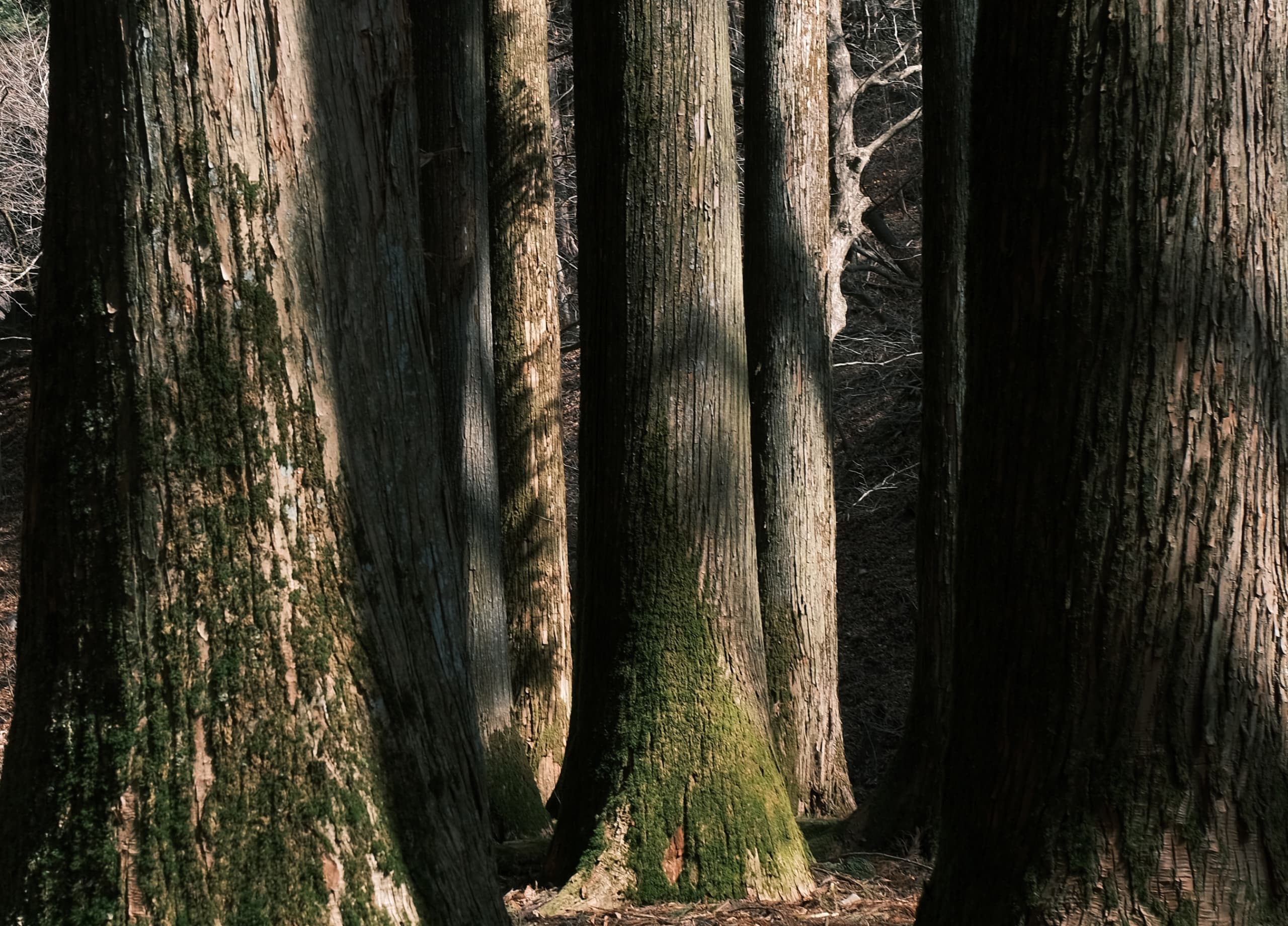
Hinoki from the Chichibu area of Saitama, nurtured by steep slopes with large temperature swings and rich red soil
Even hinoki varies in character depending on where it grows. KINARI MANAITA are made from hinoki from the Chichibu area of Saitama Prefecture that meets our strict standards.
The mountains of Saitama have been prized as a source of high-quality timber since the Edo period, and their wood is still used today to repair famous castles and build temples and shrines across Japan. Hinoki grown here rivals the most famous premium brands, with soft wood, a beautiful white surface and a remarkable amount of natural oil. The secret lies in where it grows, on steep mountain slopes where temperatures swing so widely that mist hangs in the air, and in the mineral-rich red soil unique to the Chichibu area. Hinoki grown in this environment stores an abundant amount of the wood's natural oils as it matures.
Its soft wood also shows in how well it pairs with knives. Its gentle give softly receives the blade, so there is less strain on the edge and your knife stays sharp longer.
Its rich oils help it shed water, and the fresh scent that rises with every cut makes your daily time in the kitchen all the richer.
Softness that is kind to knives, oils that help it dry quickly, and a fresh scent.
The material with everything we had been searching for: hinoki from the Chichibu area of Saitama Prefecture.
Planned harvesting that nurtures the forest for the future
This beautiful hinoki is shaped not only by nature, but also by the attentive care of foresters.
They prune and thin the trees regularly so that they grow straight and healthy, tending the forest carefully so that sunlight reaches every part of it.
The large trees KINARI uses, over 100 years old, are a finite resource: once felled, it takes an immense amount of time for new ones to grow. Rather than cutting many at once, the foresters practice planned harvesting, reading the balance of the forest and taking only trees that have fully matured, one by one.
We make full use of every part of these precious lives, and are committed to sustainable craftsmanship that carries Japan's rich forests into the future.


Japanese wild cherry / Yamazakura - a wood of wild character and quiet elegance
6.Ornamental Somei-Yoshino vs. yamazakura as timber
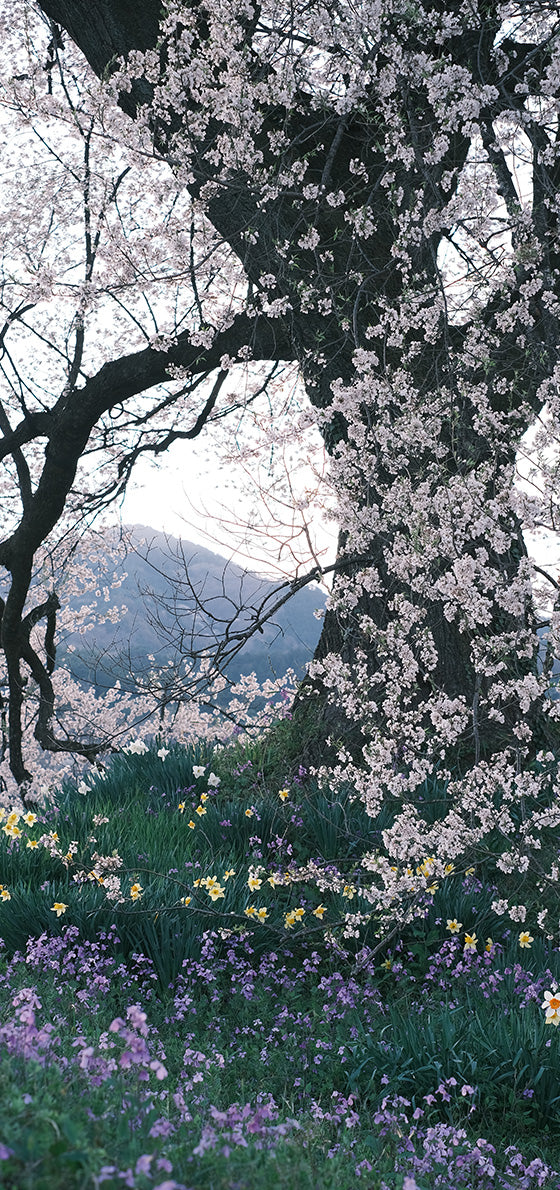
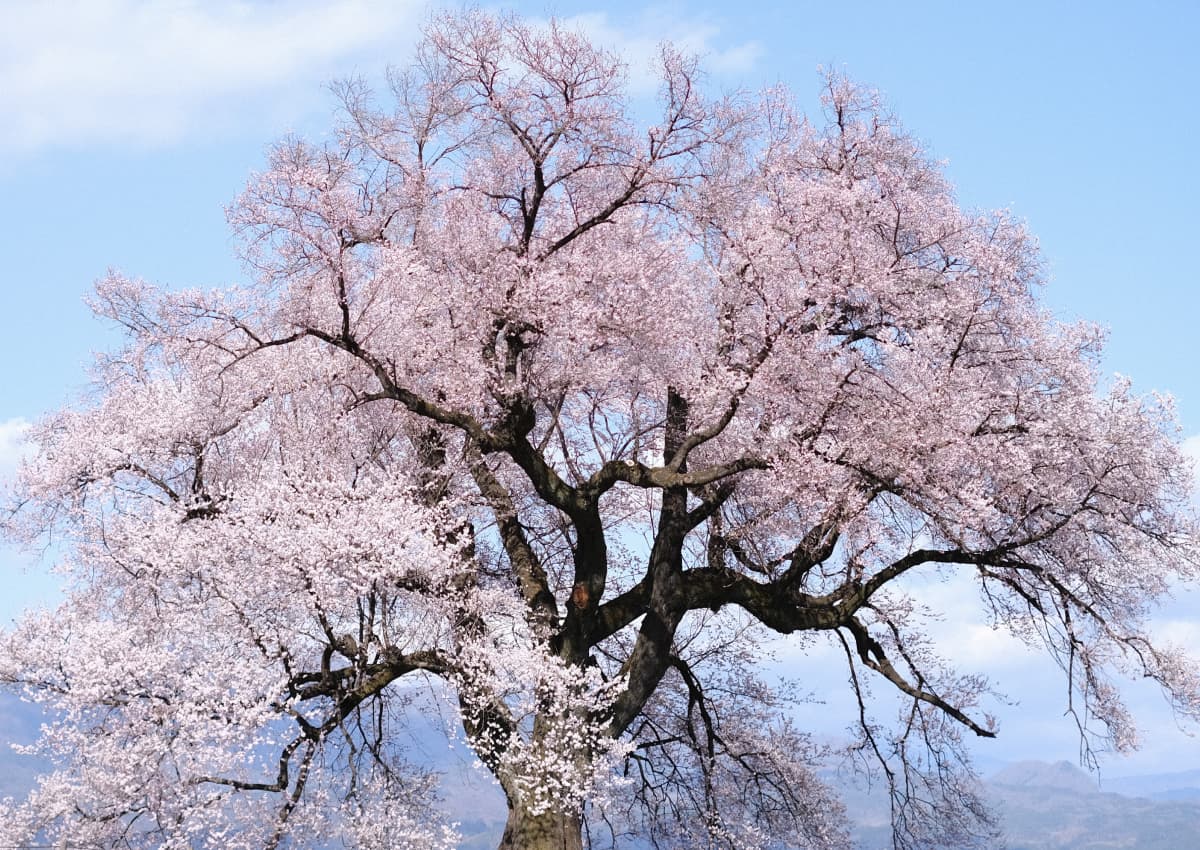
Somei-yoshino, the cherry beloved throughout Japan as a sign of spring, is a hybrid bred for ornamental viewing. It is short-lived and not suited for timber.
The Japanese wild cherry (yamazakura) used for KINARI Cutting Boards, by contrast, is a wild species that grows naturally in Japan's mountains and fields.
With the resilience to survive harsh conditions, its beautiful, durable wood has long been prized for fine furniture, woodblock printing, and everyday tools.
Combining strength and beauty, wild cherry is truly a gift of nature, worthy of a tool for life.
7.The pleasure of aging (patina) that grows with your daily life
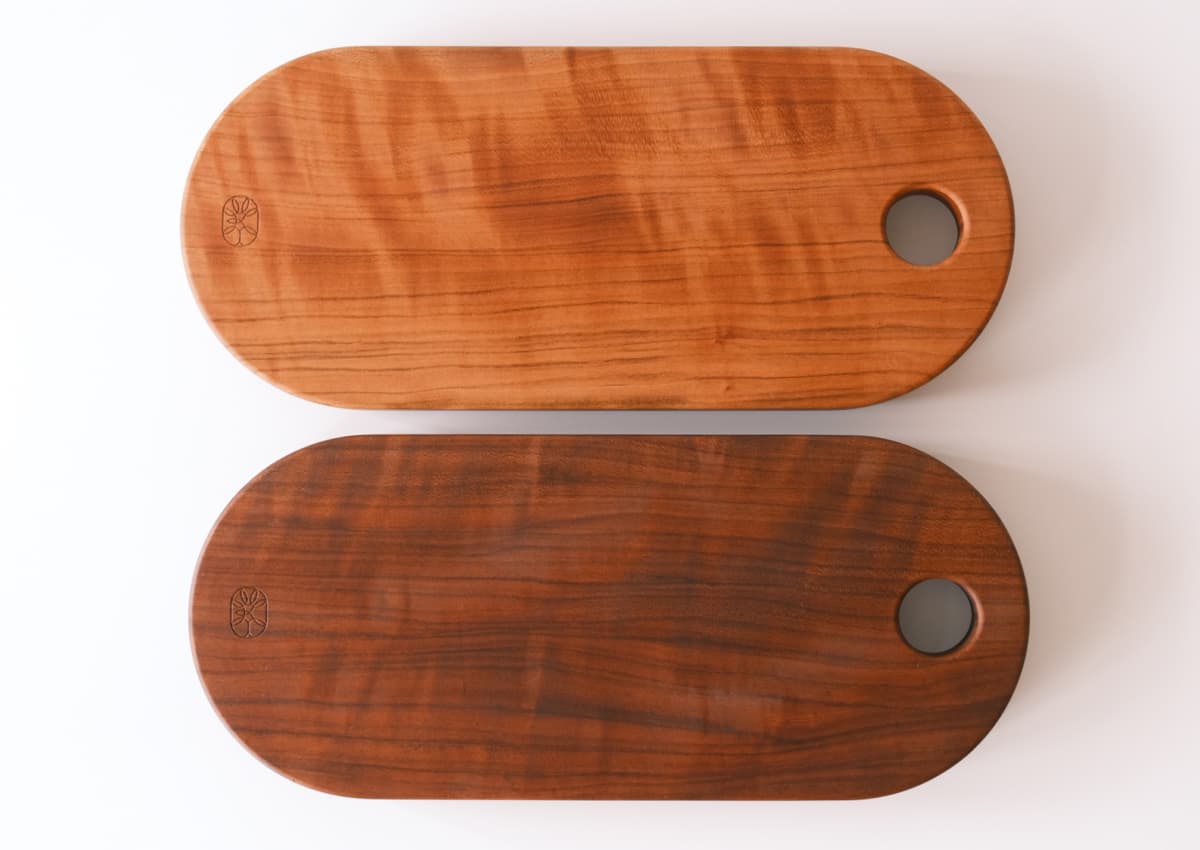
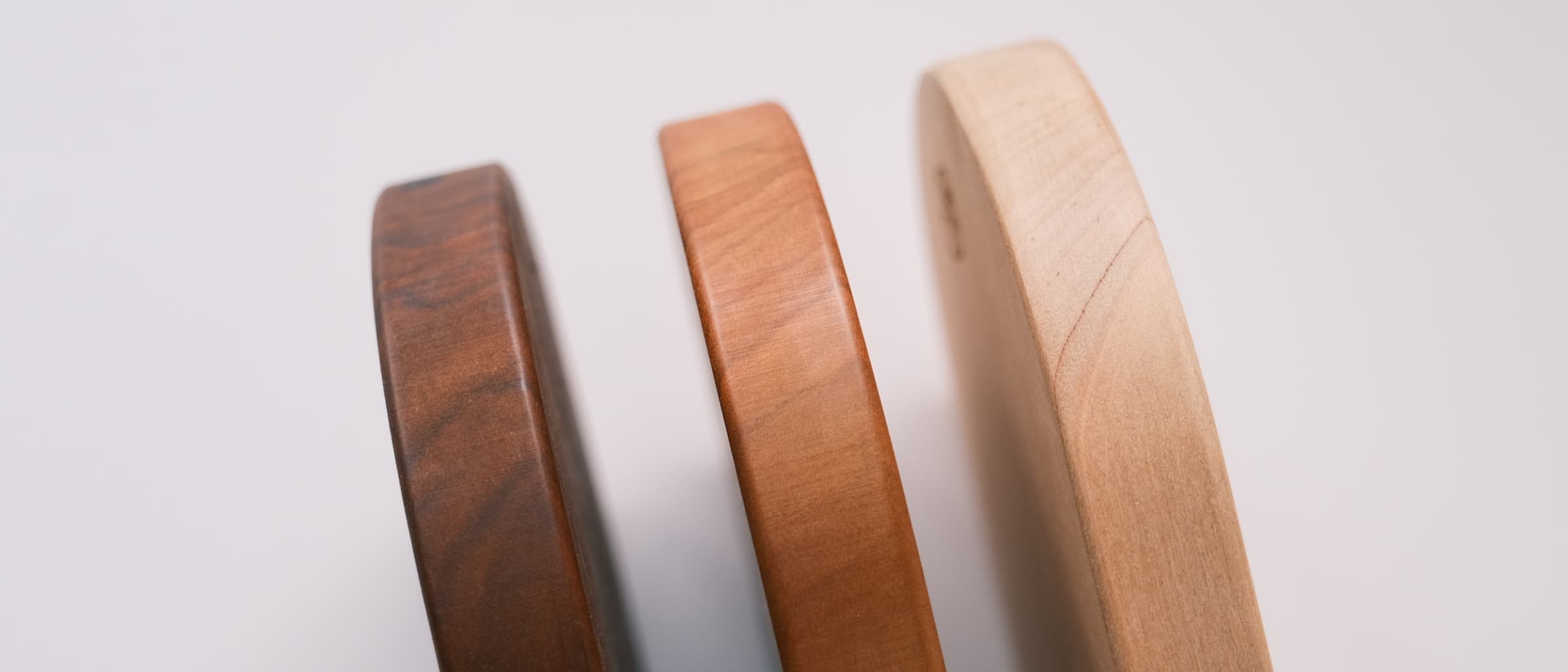
The greatest charm of wild cherry is its aging (patina), which grows deeper with time.
At first it has a soft, pale pink or yellowish-brown tone. As you use it and apply oil as part of regular care, it gradually deepens into a rich amber or reddish brown.
Its fine, smooth surface gains luster the more you use it, settling comfortably into your hand.
Much like leather, it records the story of your daily life, and you can enjoy watching it grow beautifully into a tool that is yours alone, one of a kind.
8.Why KINARI uses wild cherry for its cutting boards
For our MANAITA, which handle the demands of daily cooking, we use hinoki for its moderate softness and water resistance. A Cutting Board that goes straight to the table, however, calls for different qualities.
A Cutting Board is used to slice bread, cheese and firm ingredients, then brought to the table as a serving board.
What it needs is enough hardness to resist knife marks, beautiful color and grain that set off the food, and a smooth texture that feels pleasant even when cutlery touches it.
In search of the finest material to meet all of these conditions, we arrived at wild cherry.

9.About KINARI's wild cherry
The character of Shizuoka wild cherry, shaped by rich nature and varied elevation
KINARI Cutting Boards are made from carefully selected wild cherry grown in Shizuoka Prefecture.
Wild cherry grows throughout Japan, so we are sometimes asked: why Shizuoka?
The answer is that Shizuoka's natural environment aligns perfectly with how wild cherry likes to grow.
High-quality wild cherry thrives on sunny slopes and in well-drained ground.
Shizuoka's mild climate, rich mountain forests and many sloping hillsides provide the ideal setting for wild cherry to grow healthy and strong.
Every tree is different, each one unique
Shizuoka also spans a remarkably wide range of elevations, from the coast up into the mountains.
Because of these contrasting conditions, even trees grown within Shizuoka each take on an entirely different character, depending on the elevation and sunlight where they grew.
Bold grain, gentle color, rich patterns drawn by nature.
The beautiful individuality of each piece of wild cherry reflects Shizuoka's dynamic natural landscape itself.
We cherish the unique character this land has nurtured, and our craftsmen carefully cut each board by hand so that its grain looks its most beautiful.
A wild cherry Cutting Board, born of Shizuoka's rich nature and the handwork of skilled craftsmen.
A special board to grace your table and accompany you every day.

Previous


Every KINARI product is carefully finished one by one by skilled craftsmen, who read the character of each material through every step from selecting the wood to processing and shaping.
Read about our crafting processRecently viewed
- Hinoki cypress
- 1.Flower language: “firm bonds” and “great perseverance”
- 2.Main types of hinoki and their characteristics
- 3.Over 1,000 years of hinoki architecture, passed down to the future
- 4.Why KINARI uses hinoki
- 5.About KINARI's hinoki
- Japanese wild cherry (yamazakura)
- 6.Ornamental Somei-Yoshino vs. yamazakura as timber
- 7.The pleasure of aging (patina) that grows with your daily life
- 8.Why KINARI uses wild cherry for its cutting boards
- 9.About KINARI's wild cherry
Journal


Shopping Guide
About orders
Payment
We accept the following payment methods.


About shipping
Domestic shipping (Japan)
Time to dispatch
Orders ship within 3–5 business days.
Shipping fee
Free shipping.
*Okinawa Prefecture only: ¥550 (tax incl.)
International shipping
Time to dispatch
Varies by destination country.
Shipping fee
Depending on the destination and box size, shipping is $25–$136 to the United States and ¥2,800–¥14,800 to Hong Kong and Singapore.
Customs duties, import taxes and clearance fees incurred on delivery are not included.
FAQ
Answers to common questions about care, resurfacing requests, returns and exchanges.
Does each product vary?
This product is made from natural wood. Each piece therefore varies in grain and color, and may show small knots formed as the tree grew or slight variations in tone. None of these affect quality or hygiene.
We kindly ask that you purchase with an understanding of the characteristics of natural wood. As a rule, we are unable to accept exchanges for reasons inherent to natural materials, such as grain, color, or knots.
Are there care instructions for each product?
We provide everyday use and care instructions covering all our products.
Learn moreCan I use a dishwasher?
We do not recommend it, as it can cause warping and cracking. Please wash by hand.
Can I return an item?
We accept returns of unused items if you contact us within 3 days of delivery. For details, please see our Refund Policy.
Is there a discount for buying multiple boards?
Exclusively at our online store, we offer a bundle discount when you buy multiple boards.
*Applies only when all items are shipped to the same address.